For first-timers
How to watch a flamenco show
What to look and listen for in a flamenco show: who does what on stage, how the guitar leads, what the clapping and shouts mean and how to react.
See open evenings and book ↗Quick answer
Start with the guitarist, who sets the key, rhythm and tempo. Then follow the singer's verses, watch the dancer's footwork and arms, and listen for the handclaps and shouts that keep the compás. You do not need Spanish. Applaud at the end of pieces, follow the room when it joins in, and keep phones low in a small tablao.
Who is on stage
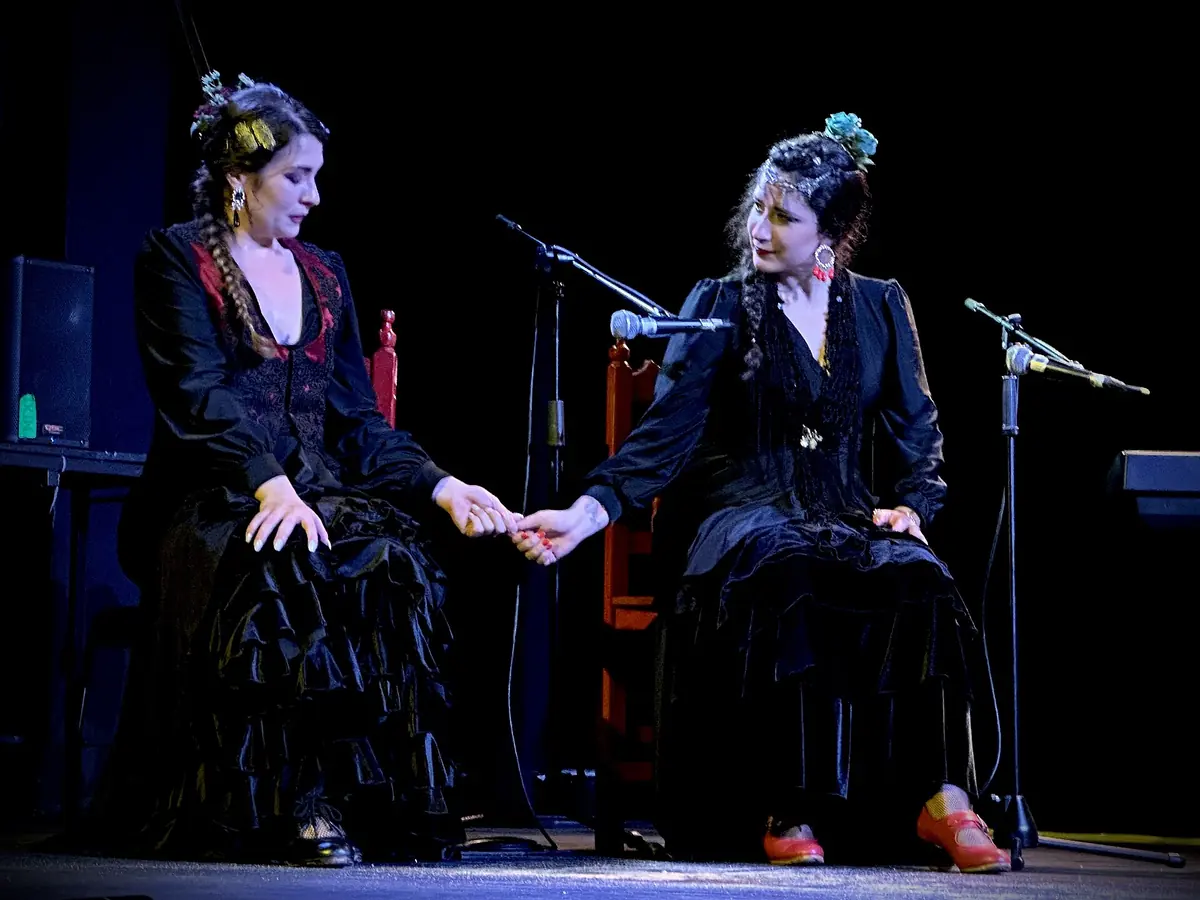
A flamenco show has a few parts. The guitarist is the tocaor, the singer the cantaor or cantaora, and the dancer the bailaor or bailaora. Other performers keep the rhythm with palmas, handclaps, or by tapping a surface. They sit or stand close together, and the roles pass between them: the guitar can lead, then the voice, then the dancer, with the others answering.
Start with the guitar
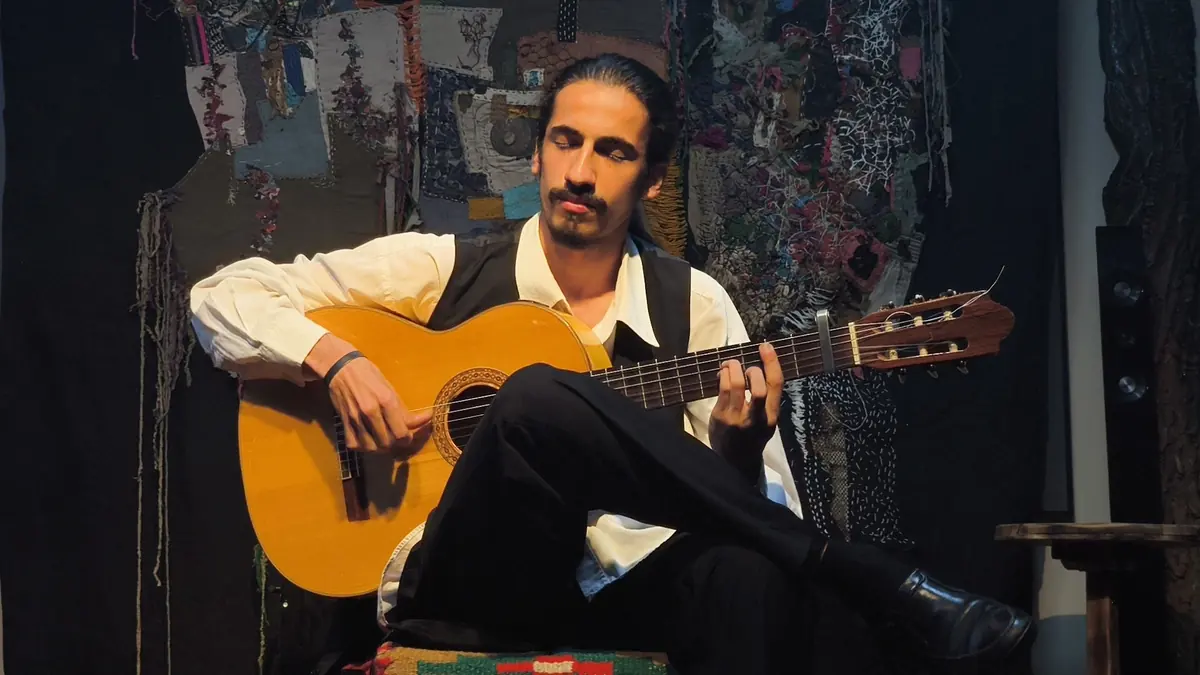
At a typical recital the guitarist opens with a brief passage that fixes the key, the compás and the speed for what follows. Between verses the guitar plays falsetas, melodic interludes that fill the space. Flamenco guitarists often cross their legs and rest the guitar nearly flat, and they strum, tap the soundboard and play the rhythm as well as the tune. Watching the right hand tells you where the beat is, and listening for the moment the guitar changes chord tells you where the accent falls.
Follow the singer
A song strings together verses, known as coplas or letras, and the guitar fills the spaces between them. The cantaor sings in Spanish, and the venue's own site says you do not need to understand the words to feel what is happening. Listen instead to how the voice bends, stops and starts again. The most serious songs belong to cante jondo, deep song, and the lighter ones to cante chico. A pause is part of the singing, not a gap.
Watch the feet and the arms
Flamenco dance is known for emotional intensity, proud carriage, expressive arms and rhythmic stamping. The footwork is a language: the dancer answers the guitar and the claps with heel, toe and the flat of the foot. Dancers may use props such as shawls, fans, canes or castanets. Pay attention to stillness as well. A dancer who stops moving completely, just before the footwork returns, is often making the point of the whole phrase.
The clapping and the shouts
Jaleo is rhythmic clapping together with calls such as olé that encourage the performers. It is part of the art, performed in time with the music. In a tablao you will hear the cast do it for each other. If the room joins in, you can too, but follow its lead: clap on the beat or not at all. Silence while a singer holds a line is a form of applause, and loud applause belongs at the end of a piece.
Duende and the moments that land
Flamenco has a word for the moment a performance goes beyond technique: duende. Wikipedia quotes the Spanish Academy's definition of a mysterious, ineffable charm, and the poet Federico García Lorca remarked that no map or exercise leads to it. You cannot plan for it, and you cannot count on it on a given night. What you can do is sit close, listen and let the evening build, because the room usually tells you when something has happened.
Manners in a small room
A tablao is a small room, so the usual rules are the ones for any intimate performance. Keep conversation low while someone sings. Keep your phone away or low, because a raised screen blocks the view. The venue's blog says photos are possible but recommends enjoying the moment. Applaud at the end of pieces and when the room does, and save the loudest cheers for the finale. Wikipedia notes that there is no passive audience in flamenco: listeners join in by clapping and sometimes by singing along, so reacting to the music is part of the form.
Frequently asked questions
Should I clap along?
Only if the room does. Jaleo is part of flamenco, but clapping off the beat is worse than not clapping. Follow the performers and the people around you.
Is a flamenco show improvised?
Partly. Traditional flamenco works through calls and signals, so much is improvised. Staged shows tend to be more choreographed, with group dances and set pieces.
Do I need to prepare before going?
No preparation is needed. The venue's own blog says you do not have to know flamenco to enjoy a show. Read the guides here if you want the terms in plain words.
What should I watch first?
The guitarist. The opening sets the key, rhythm and tempo, and the other performers answer it.
Sources